
Today, millions of Americans pay for their health insurance, but when it comes time to use their coverage, they realize their insurance plan covers less and less.
Hospitals care for everyone who comes through their doors and see firsthand how low-quality insurance plans limit patients’ access to care, making the affordability crisis worse.
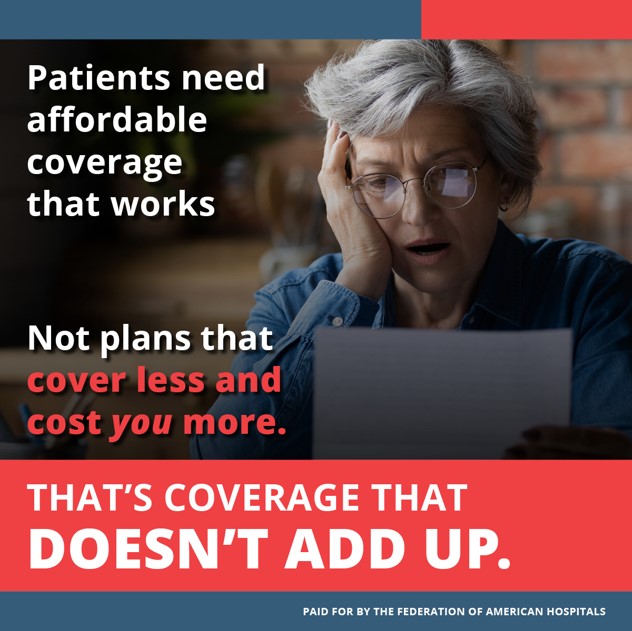
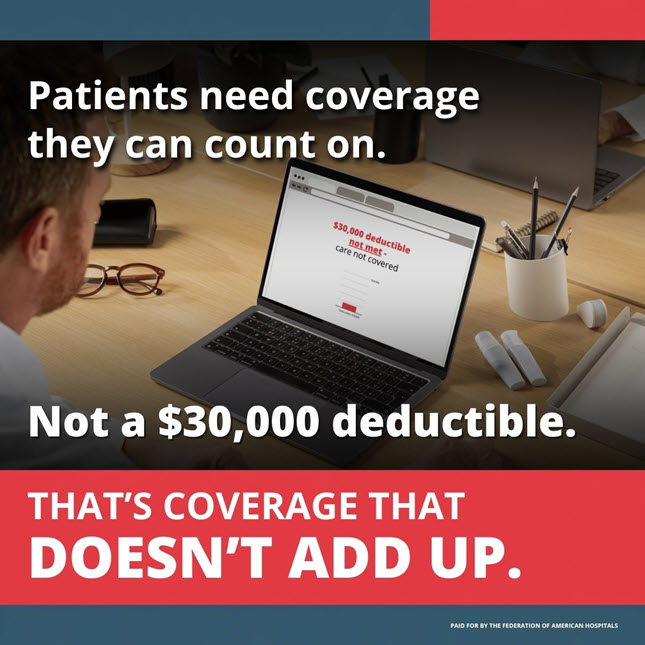
Despite paying monthly premiums, many families still face uncertainty about whether their insurance will be there when they need it most. Too often, Americans must also pay thousands of dollars out of pocket to meet high deductibles before comprehensive coverage begins, leading some to delay or forgo needed care due to out-of-pocket costs.
On top of that, insurance companies use narrow networks, prior authorization requirements, and delays or denials that drive up costs and make it harder for patients to access care.
These barriers often stem from how insurers design their plans and from the incentives created by vertical integration, as insurers buy up pharmacy benefit managers, doctors, and more under their single corporate structure. With little transparency into these decisions, patients are left paying more for coverage that delivers less.
“Hospitals witness the affordability crisis playing out every day – out-of-pocket costs continue to rise and families worry their coverage won’t be there when they need it. It’s time to fix what’s not working… that means addressing benefit designs that leave patients exposed to high out-of-pocket costs and bringing real accountability and transparency to how vertically integrated insurers are using premium dollars.”
Charlene MacDonald, FAH President and CEO, Statement ahead of House Energy and Commerce Health Subcommittee’s hearing on lowering health care costs
Key Facts
“To lower the cost of health care for Americans starts with demanding transparency from big insurers… Our hospitals serve every patient who walks through their doors and have made significant investments to provide their patients with upfront tools that empower them to make the best choices for their health needs. Hospitals are doing their part for patients – now it’s time for insurers to do the same.”
Charlene MacDonald, FAH President and CEO, Statement after the State of the Union Address
What Congress is Saying
“Complicated benefit designs, narrow networks, prior authorization requirements and opaque coverage decisions often leave patients feeling like they are paying more for less. The market also lacks transparency,” Energy and Commerce Committee Chair Brett Guthrie (R-Ky.)
“Even when people do have coverage, good care can still be a fight to get through denials, prior authorization requirements, and sky-high co-pays and deductibles that create additional barriers between America’s patients and the care that they need,” Representative Diana DeGette (D-Colo.)
Patients rightly expect that the premiums they pay will translate into meaningful access to hospitals, physicians and other needed services. To strengthen patients’ affordability, promote insurer accountability and ensure that coverage translates into meaningful access to care, policymakers should:
- Increase transparency into how insurers design benefits and build provider networks, so consumers can see what their coverage includes and which providers they can access before they need care.
- Hold insurers accountable for benefit designs and narrow networks that expose patients to high out-of-pocket costs, limit their choice of providers and create barriers to care through prior authorization and denials.
- Strengthen medical loss ratio oversight so premium dollars are directed toward patient care rather than financial arrangements within vertically integrated insurer structures.
“Patients need to have the confidence that the premiums that they’re paying are actually supporting their medical care,”
said FAH President Charlene MacDonald in an interview. Politico.
“Patients need to have the confidence that the premiums that they’re paying are actually supporting their medical care,”
said FAH President Charlene MacDonald in an interview. Politico.
